Phones ringing nonstop. WhatsApp buzzing. Swiggy/Zomato tablets beeping. Staff juggling dine-in guests while trying not to mess up online orders. If this sounds like a normal day, you’re exactly who this guide is for.
AI for restaurants is no longer a buzzword—it’s a practical way to reduce chaos, capture more revenue, and deliver a smoother guest experience without hiring a bigger team.
In this guide, we’ll break down where AI actually works in restaurants today (and where it doesn’t), how it plugs into your existing channels like WhatsApp and phone calls, and what kind of results you can realistically expect.
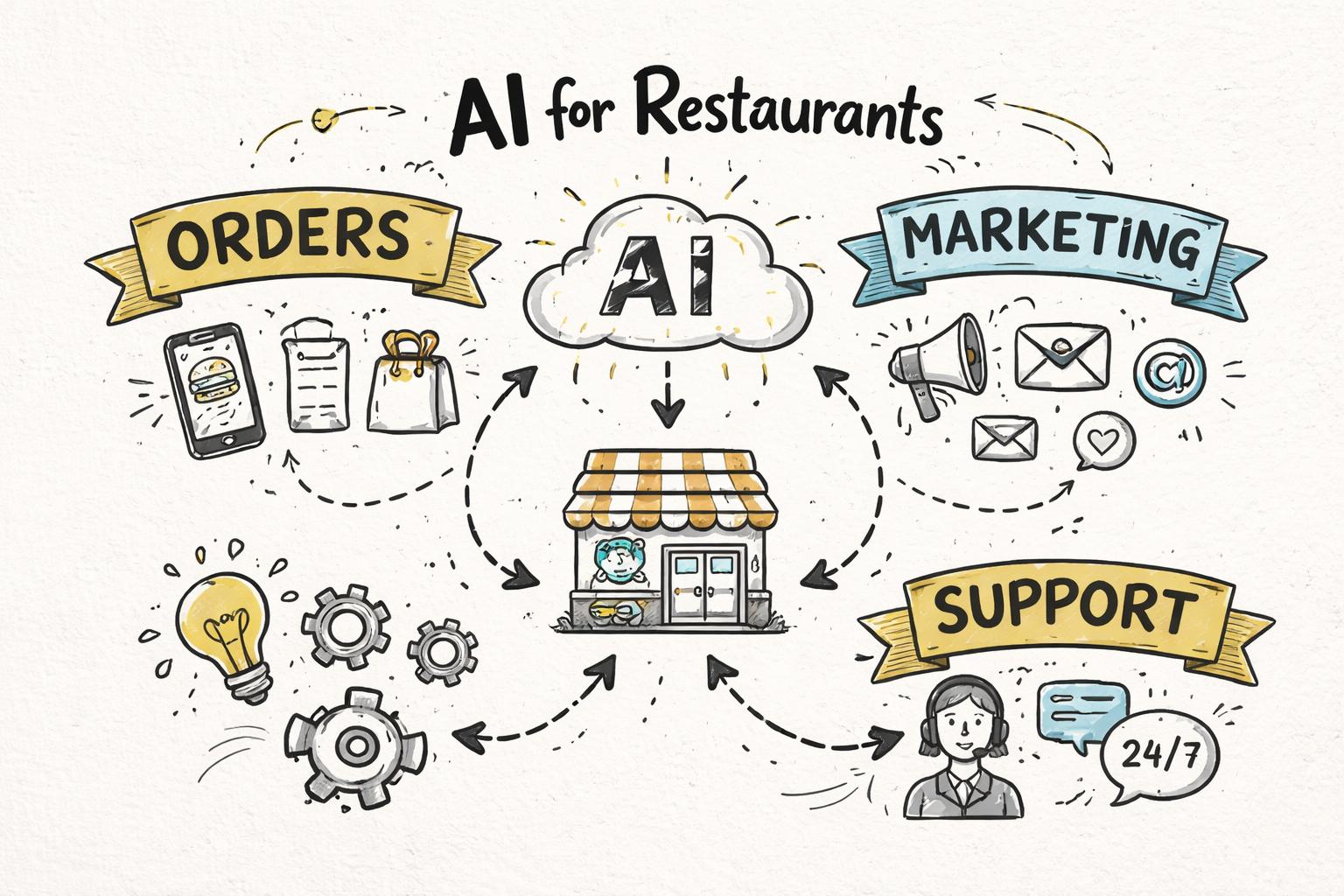
We’ll focus especially on three high-impact areas: orders, marketing, and support—the same pillars we dive deeper into in our resources on AI WhatsApp ordering, WhatsApp marketing strategies, and AI chatbots for restaurants.
Use this as a practical playbook to decide: what should you automate now, what can wait, and how to avoid expensive mistakes.
What does “AI for restaurants” actually mean?
"AI for restaurants" is simply software that can understand messages or voice, make decisions based on your menu and rules, and trigger actions automatically—like placing an order, sending a promo, or confirming a delivery.
In practice, modern AI restaurant software usually shows up as:
A WhatsApp bot that takes orders, answers FAQs, and shares your menu 24/7
An AI chatbot on your website or Instagram DMs
AI voice calling that confirms deliveries or follows up on missed calls
A restaurant CRM that uses AI to segment guests and send the right offers
Automation workflows that connect ordering, marketing, and support tools
Think of an AI restaurant management system as a layer that sits on top of your existing channels—WhatsApp, phone, delivery platforms, POS—and handles a big chunk of repetitive communication and coordination for you.
Why AI matters now: the business case in plain numbers
Margins are tight, labor is expensive, and guests expect instant replies. AI doesn’t replace your team; it protects their time for the work only humans can do: great food and hospitality.
Industry data backs this up. According to McKinsey’s research on AI in consumer-facing businesses, automation can reduce time spent on routine customer interactions by 30–50%. In restaurants, that translates into fewer missed calls, faster replies, and more captured orders.
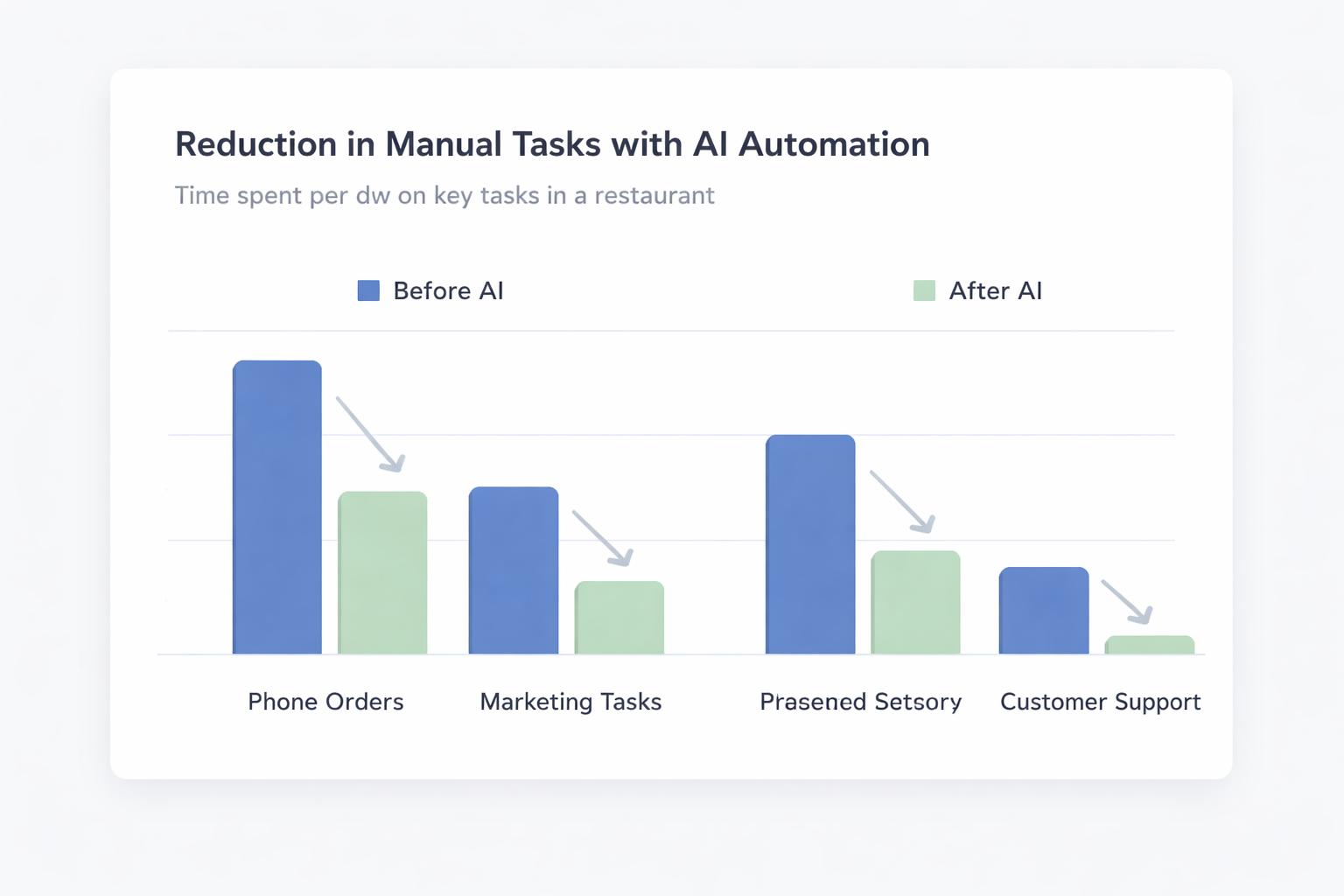
When you implement AI thoughtfully, you can typically:
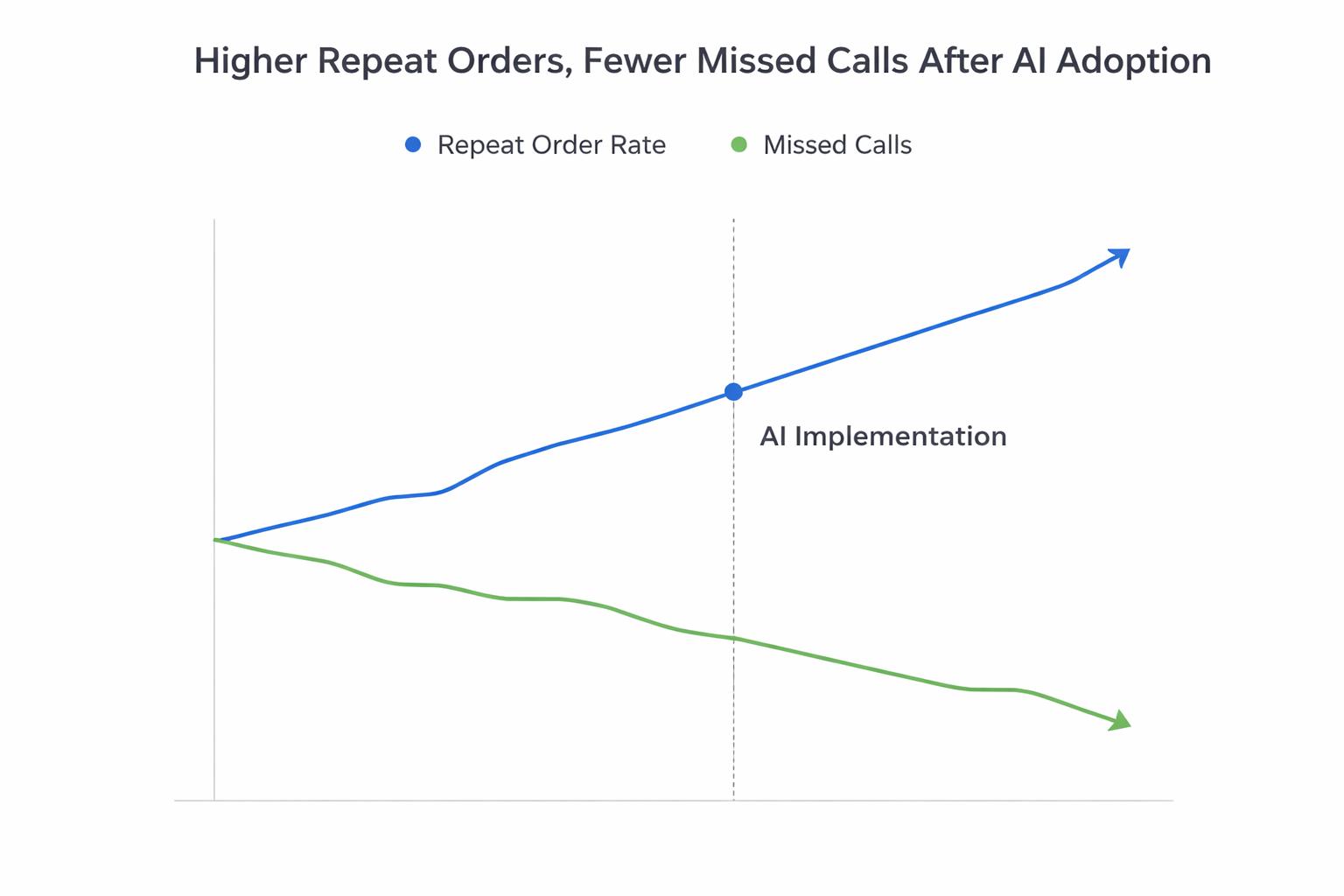
Capture more orders: Fewer missed calls and faster replies on WhatsApp and social
Increase repeat orders: Personalized campaigns instead of random blasts
Reduce staff stress: AI handles FAQs, order confirmations, and basic support
Get better data: Every interaction is logged in a CRM, not lost in phone history
The rest of this guide shows how to get these results, step by step.
Where AI fits in the modern restaurant tech stack
Most restaurants already use some mix of POS, delivery aggregators, website ordering, and social media. Adding AI doesn’t mean replacing everything—it means connecting these pieces so they talk to each other and work automatically.
A typical AI-powered restaurant stack looks like this:
Front-end channels: WhatsApp, phone, website chat, Instagram/Facebook DMs
AI layer: Chatbots, WhatsApp bots, AI voice calling, recommendation engines
Core systems: POS, kitchen display, delivery partners, reservation system
Data & CRM: Guest profiles, order history, campaign performance
Platforms like Waitwhiz act as this AI layer—connecting WhatsApp ordering, AI chatbots, AI voice calls, and a restaurant CRM so you can run restaurant automation software without stitching together 10 different tools yourself.
The 3 biggest AI opportunities for restaurants
Let’s go deep into the three areas where AI consistently delivers ROI today:
Automating orders (especially via WhatsApp and chat)
Automating marketing (segmented, personalized, and measurable)
Automating support (FAQs, missed calls, delivery confirmation)
1. AI for order-taking: from missed calls to 24/7 conversations
Order-taking is still where most restaurants lose the most money—through missed calls, slow replies, and errors when staff are multitasking.
AI can handle a huge portion of this through WhatsApp ordering, website chatbots, and even voice.
WhatsApp AI ordering: how it works
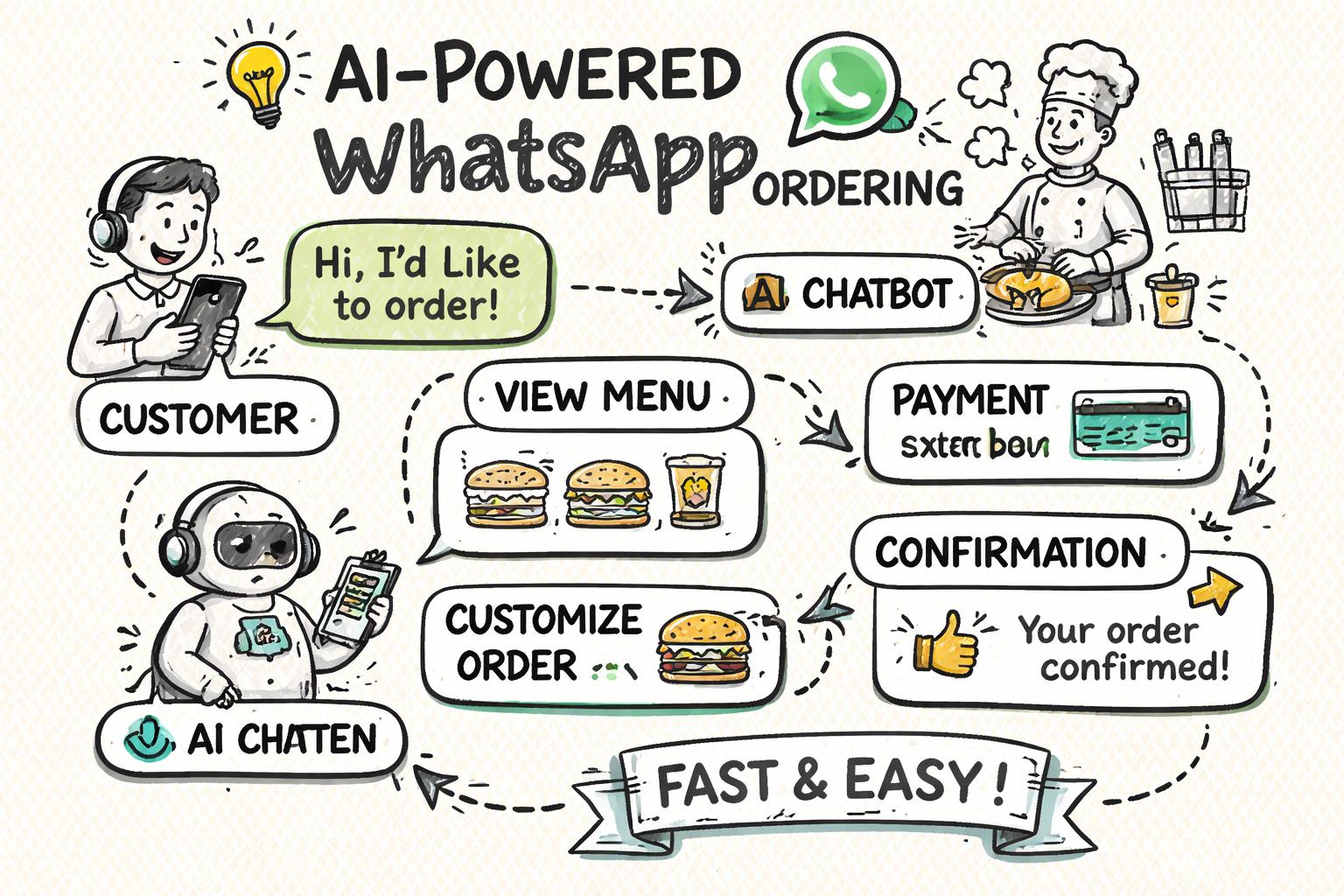
WhatsApp is already where your guests are. With an AI bot trained on your menu, you can let customers:
Start a chat by messaging your number or scanning a QR code
Browse your menu with categories, images, and prices
Customize items ("extra cheese", "no onions", "make it spicy") in natural language
Share location for delivery or choose pickup
Pay via integrated payment links or COD
Receive automatic order confirmation and ETA updates
We break this down in detail in our guide to AI WhatsApp ordering for restaurants, including real conversation flows and setup tips.
Benefits of AI-driven WhatsApp ordering
Fewer missed orders: Guests don’t wait on hold; they just message you
Higher order accuracy: AI repeats back the full order and captures special instructions
Higher average order value: AI can suggest add-ons ("Would you like fries or a drink with that?")
Better data: Every order is tied to a phone number and stored in your CRM
With a restaurant-trained LLM like the one powering Waitwhiz, the bot can understand messy, real-world messages ("Bhai, 2 paneer tikka, one very spicy, one no onion") and convert them into structured orders for your kitchen.
AI chatbots on web and social
Beyond WhatsApp, the same AI engine can power chat on your website, Instagram, and Facebook. Instead of a static "Call us to order" button, guests can complete the entire order in chat.
Our deep-dive on AI chatbots for restaurants covers which channels to prioritize and how to route complex cases to human staff.
AI voice calling for delivery and missed calls
Not every guest wants to chat. Some will still call—and when your line is busy, those calls often get missed.
AI voice calling can help by:
Automatically calling customers to confirm delivery or pickup orders
Following up on missed calls with an automated callback
Sharing order status updates ("Your order is on the way")
Our guide to AI voice calling for food delivery explains how this reduces failed deliveries and improves customer trust.
Where AI order-taking works best (and where it doesn’t)
Works best for:
Repeatable menus (QSR, cloud kitchens, cafes, casual dining)
High volume of phone/WhatsApp orders
Standard customizations and add-ons
Less ideal (needs more human touch) for:
Fine dining with highly complex or seasonal menus
Events, catering, or large group bookings with many variables
Situations needing judgment (allergy conversations, special off-menu requests)
The right approach is often hybrid: AI handles routine orders and FAQs; staff step in for edge cases.
2. AI for restaurant marketing: from random blasts to smart campaigns
Many restaurants treat marketing as "post on Instagram, send a broadcast, hope for the best." AI lets you turn this into a predictable, trackable revenue channel.
Instead of sending the same offer to everyone, an AI restaurant software with CRM capabilities can segment guests based on:
Visit frequency (new, at-risk, loyal)
Average order value
Preferred dishes or categories
Channel (dine-in vs delivery vs takeaway)
Time of day and day of week they usually order
Then it can trigger automated WhatsApp campaigns with the right message at the right time.
We cover this in depth in our guide to restaurant WhatsApp marketing strategies that actually drive repeat orders.
Examples of AI-powered marketing automations
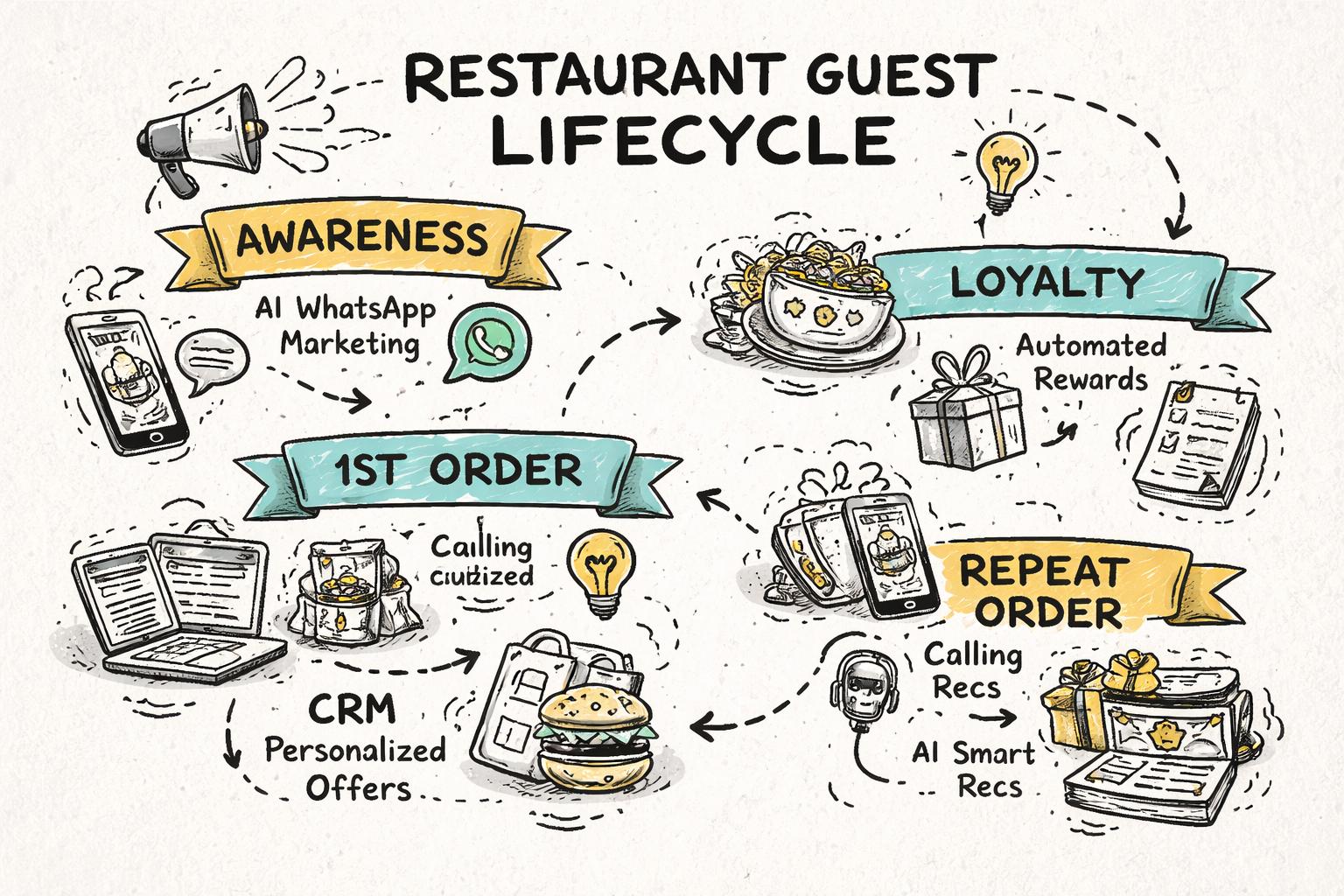
New guest welcome: After a first order, send a thank-you message and a small discount for the next visit
Win-back campaigns: If a guest hasn’t ordered in 30 days, send a personalized offer
Birthday and anniversary messages: Auto-detected from CRM or collected via campaigns
Rainy day promos: Triggered when weather APIs detect rain in your area
Item-based offers: Target burger lovers with burger combos, dessert fans with sweet deals
According to Twilio’s State of Customer Engagement report, personalized communication can increase customer lifetime value by up to 300% in some sectors. In restaurants, even a 10–20% lift in repeat orders can transform your P&L.
AI-powered restaurant CRM and loyalty
A strong restaurant CRM is the backbone of all this. AI helps by:
Automatically building guest profiles from WhatsApp, phone, and web orders
Detecting patterns ("orders every Friday", "always orders vegetarian")
Suggesting segments and campaigns you may not have thought of
Our guide on restaurant CRM and loyalty with AI shows how to turn anonymous orders into a real guest database you control.
What good AI restaurant marketing looks like
Effective AI-powered marketing is:
Consent-based: Guests opt in to WhatsApp and know what to expect
Segmented: Different messages for students vs families vs office crowds
Measurable: You can see which campaigns drive orders, not just clicks
Respectful: No spamming at odd hours or daily blasts
Done right, this turns WhatsApp into a revenue channel, not just a support inbox.
Support is where AI shines because most questions are repetitive:
An AI restaurant management system can handle 60–80% of these instantly across WhatsApp, website, and social, leaving staff to handle only complex or sensitive conversations.
Common support use cases for hospitality AI solutions
Instant FAQs: Hours, location, parking, delivery areas, menu items
Order status: Pulling live updates from POS or delivery partners
Reservation queries: Availability, timing, special requests
Basic complaint triage: Logging issues, offering standard remedies, escalating to a human when needed
According to a Salesforce survey on customer expectations, 83% of customers expect to interact with someone immediately when they contact a company. AI lets you meet that expectation without hiring a 24/7 call center.
AI voice and missed-call handling
AI calling can also work as a support layer:
Automatic callbacks for missed calls ("We saw you called—how can we help?")
Proactive calls when there’s a delay ("Your order will be 10 minutes late")
Post-order feedback calls or WhatsApp messages
This combination of AI chat + AI voice is what turns your restaurant into a truly responsive brand without overwhelming your team.
You might wonder: why not just use a generic chatbot or marketing tool?
Specialized AI restaurant software has key advantages:
Menu understanding: Handles combos, variants, and customizations correctly
Restaurant-specific flows: Delivery vs pickup, table booking, order timing, kitchen capacity
Integrations: POS, delivery aggregators, and kitchen systems
Compliance: WhatsApp Business API rules, opt-in requirements, and local regulations
Waitwhiz, for example, uses a proprietary in-house LLM trained specifically on restaurant menus and real-world conversations, which means better accuracy and fewer frustrating "bot" moments for guests.
How to get started with AI in your restaurant (practical roadmap)
You don’t need to automate everything at once. In fact, you shouldn’t. The best approach is phased, with clear ROI at each step.
Phase 1: Quick wins (0–30 days)
Turn on WhatsApp ordering with a basic AI flow for menu, ordering, and FAQs
Automate top 10 FAQs across WhatsApp and website chat
Set up order confirmation messages (WhatsApp + optional AI calls for delivery)
These alone can reduce missed calls and manual responses dramatically. Our restaurant automation checklist lists 15 workflows you can hand over to AI in this first phase.
Phase 2: Build your CRM and basic campaigns (30–90 days)
Centralize guest data from WhatsApp, phone, and web into one CRM
Define core segments: new, active, at-risk, VIP
Launch 2–3 automated campaigns: welcome, win-back, and birthday/anniversary
At this stage, you should start seeing a lift in repeat orders and better response rates to your offers.
Phase 3: Advanced automation and optimization (90+ days)
AI-driven recommendations ("Guests like you also order…") in chat
Dynamic offers based on time of day, stock levels, or weather
Deeper voice automation for delivery confirmation, feedback, and missed calls
Continuous A/B testing of messages and offers
By now, AI is not a side project—it’s part of how your restaurant operates every day.
What to look for in an AI restaurant management system
When evaluating hospitality AI solutions, focus less on shiny features and more on how well they fit your operations.
Essential capabilities
WhatsApp-native experience: Full ordering, support, and campaigns inside WhatsApp
Restaurant-trained AI: Understands menus, combos, and natural language ordering
Multi-channel support: WhatsApp, web chat, Instagram/Facebook, and voice
CRM + analytics: Guest profiles, segmentation, and campaign performance
Automation workflows: Triggers for events like first order, inactivity, or delivery updates
Operational must-haves
Easy menu management: Update items, prices, and availability without calling support
Multi-location support if you run multiple outlets or brands
Clear handoff to humans when AI is unsure or guest requests it
Compliance and data security: Especially important for WhatsApp Business and guest data
Questions to ask vendors
Is your AI model trained specifically for restaurants and menus?
How do you handle complex or ambiguous guest messages?
What percentage of conversations can your system resolve without human intervention?
How do you measure success—orders, revenue, response time, CSAT?
What’s the typical time to go live for a restaurant like mine?
Common pitfalls when adopting AI (and how to avoid them)
AI can be powerful, but there are real risks if you rush implementation.
Pitfall 1: Over-automation without human backup
If you try to force AI to handle everything, guests will get stuck or frustrated when something unusual happens.
How to avoid it: Always provide an easy "Talk to a human" option and clear escalation rules.
Pitfall 2: Poorly structured menu and data
AI is only as good as the menu and rules you give it. Confusing item names, missing prices, or unclear options will cause errors.
How to avoid it: Clean up your menu, standardize naming, and define clear customization options before or during setup.
Pitfall 3: Treating AI like a one-time project
Guest behavior changes, menus evolve, and seasons shift. If you never update your flows or campaigns, performance will drop.
How to avoid it: Review automation performance monthly and adjust FAQs, offers, and flows with your vendor’s help.
Pitfall 4: Ignoring staff training
Your team needs to understand how AI works, when to step in, and how to use the CRM and dashboards.
How to avoid it: Run simple training sessions and create a one-page SOP on "How we use AI in our restaurant".
How Waitwhiz fits into your AI roadmap
Waitwhiz is built specifically as an AI restaurant management system that runs over WhatsApp and voice. It’s designed for restaurants and hospitality brands that want to:
Automate ordering via WhatsApp with an AI trained on their menu
Run segmented WhatsApp marketing campaigns that drive repeat orders
Handle FAQs and support queries automatically across channels
Use AI voice calls for delivery confirmation and missed calls
Centralize guest data into a CRM and run loyalty-style journeys
Because Waitwhiz uses a proprietary in-house LLM tuned for restaurants, it can handle messy, real-world conversations while still mapping everything cleanly to your menu and POS.
Is AI right for your restaurant? A quick checklist
AI will likely deliver strong ROI if you can say "yes" to most of these:
You get frequent calls or WhatsApp messages for orders or queries
Your staff are often too busy to answer quickly
You rely on repeat customers and want more structured loyalty
You’re active on WhatsApp or social but not using them fully for orders
You have (or want) multiple outlets or brands and need consistency
If that sounds like you, starting with WhatsApp ordering and basic automation is usually a safe, high-impact first step.
Next steps: turning this guide into action
To recap, using AI for restaurants is about:
Automating orders across WhatsApp, web, and voice so you capture more revenue with fewer errors
Automating marketing with segmented, personalized WhatsApp campaigns and a solid CRM
Automating support so guests get instant answers while your staff focus on food and hospitality
If you’re ready to explore how this could look for your restaurant, the smartest move is to:
List your top 5 most time-consuming guest interactions (orders, FAQs, follow-ups)
Map which of these can be automated safely with AI
Choose a specialized AI platform like Waitwhiz that understands restaurant workflows
Start with WhatsApp ordering and basic FAQs, then layer in CRM and marketing automation
Used thoughtfully, AI doesn’t replace hospitality—it protects it, by freeing your team from repetitive work so they can focus on great food and memorable guest experiences.